
3 Ways to Scale AI Across Your Enterprise
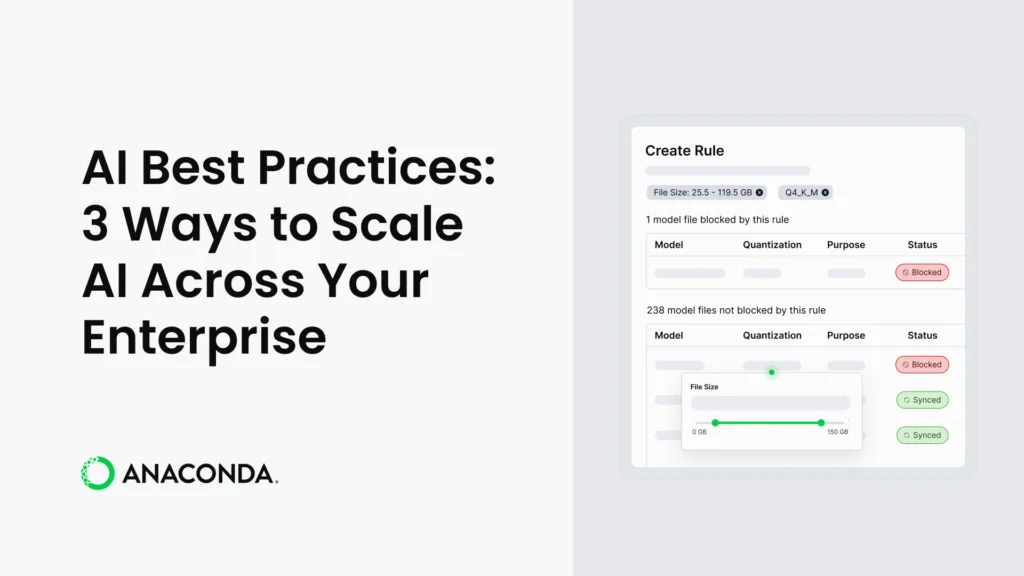
The technical work is done. You’ve chosen an open-source AI model, benchmarked its performance, and determined its cost. You know exactly how it’ll be used, and you’ve defined what success looks like. But how do you scale it without causing chaos? Many enterprises face this binary trap. Either they implement rigorous one-off approval processes that […]
Python Data Structures: Types, Use Cases, and Complexity
Understanding Python data structures might seem purely academic—until you’re processing millions of records and your code takes hours instead of minutes. The structure you choose determines whether operations take constant time or scale linearly with data size. Working with a large numerical dataset? NumPy arrays can deliver 10-100x performance improvements over lists. Need fast lookups? […]
How to Choose an Open-Source AI Model: A 6-Step Guide
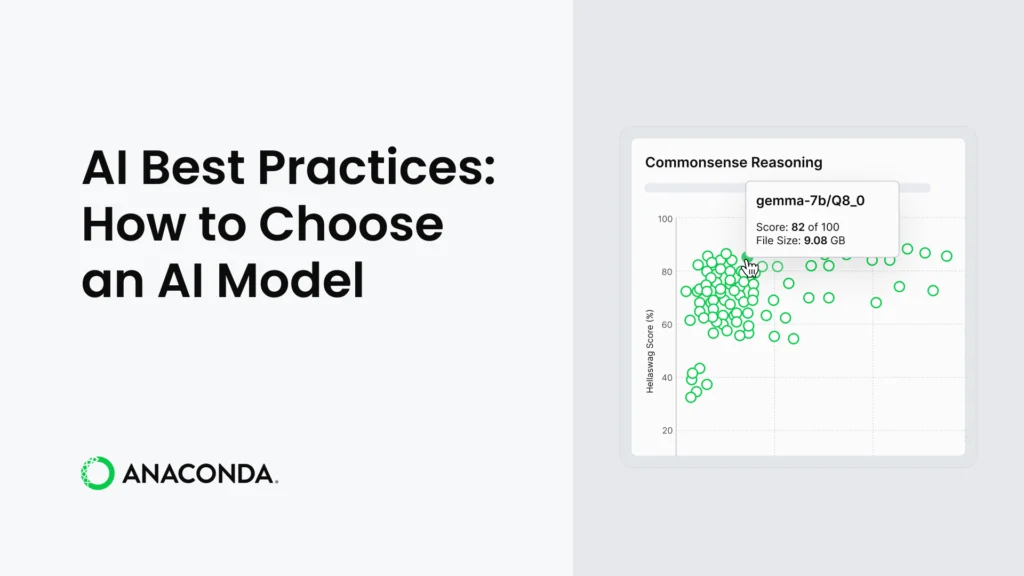
At this point, you understand the fundamentals. Open-source AI models deliver measurable benefits—namely lower costs, greater deployment control, and freedom from vendor lock-in. Now comes the hard part: Choosing which model to actually use. Public repositories contain over 2 million models, each with different capabilities and resource requirements. Teams often spend weeks evaluating options, only to […]
New Release: Anaconda Distribution 2025.12
We are excited to announce the 2025.12 release of the Anaconda Distribution installer, which includes: Python – the most widely used programming language for AI, data science and machine learning conda – the open-source, cross-platform package and environment manager Anaconda Navigator – our desktop application, built on conda, that enables you to launch notebooks and […]
Python 3.14: What Data Scientists and Developers Need to Know
Python 3.14 is here, and the data science community is already buzzing experimenting with new features. As maintainers of one of the world’s largest scientific Python distributions, we at Anaconda want to help you prepare for this upcoming release and understand what it means for your data science workflows. What is the annual Python release […]
Evolving Anaconda From Python Foundation to Enterprise AI

Anaconda’s CPO on addressing enterprise AI with two suites: Anaconda Core for Python infrastructure and AI Catalyst for governed AI models.
How I Use Minimal Reproducible Examples to Accelerate Development
Diving straight in the codebase ❌ Building a tiny test case first ✅ Recently, in an internal meeting, we mentioned we wanted to add disk caching to reports generated so that when users make the same request, they can retrieve it fast, without waiting another 10–15 minutes for it to re-process. Philipp, the lead maintainer […]
No, AI Isn’t Replacing Developers. Here’s What’s Actually Happening

You’ve probably seen the headlines by now. Vibe coding tools that promise “anyone can build apps now.” Tech leaders claiming they’ll need fewer developers thanks to AI. The conclusion they’re drawing is pretty clear: software development is a dying field. I don’t buy it. And more importantly, that’s not what I’m seeing in the field. […]
9 Things to Know About Open-Source AI Models
New to open-source AI? Congrats! You’re in good company, and your timing couldn’t be better. The market is in hypergrowth. Enterprises now account for over two-thirds of open-source AI model end users, and large organizations (those with $20B+ revenue) lead in adoption. The shift is easy to justify: Open-source AI models can reduce data exposure […]
Which Packages Should I Install?
Choosing the right Python packages for your project can feel like navigating a maze with countless paths. Whether you’re building machine learning models, analyzing data, or developing web applications, selecting the optimal combination of packages is crucial for success. Yet many developers find themselves asking: “Which packages should I install for my specific needs?” This […]