
A customer churn model crashes in production when it encounters unexpected null values in a revenue field that never appeared in training data. The model performed beautifully in notebooks, but when deployed, the pipeline can’t handle the bad data. Features that worked locally fail in production, and team members can’t reproduce results. After days of debugging, they trace the failure to missing schema validation: The pipeline had no checks to catch unexpected null values.
When an ML model fails in production, it rarely stems from poor algorithms or insufficient compute power. Instead, it’s things like bad data, inconsistent schemas, and pipelines that break in edge cases. Though most data scientists deeply understand statistical techniques and model architectures, many treat data modeling and schema enforcement as afterthoughts. Both practices fall under a broader discipline: structured data modeling.
Structured data modeling transforms chaotic data into reliable assets that support analysis, ML, and decision-making. Without it, teams accumulate technical debt, such as inconsistent schemas that break pipelines, undocumented transformations that block collaboration, and data quality issues that compound over time.
In practice, “data modeling” encompasses several related but distinct practices, from database schema design to analytics engineering workflows. This article focuses specifically on data validation and schema enforcement in Python workflows: ensuring your data structures are correct, consistent, and documented. These practices relate to broader data modeling disciplines (like dimensional modeling in data warehouses), but the focus here is helping Python-centric teams build reliable data pipelines and ML workflows.
What Is Data Modeling, and Why Does It Matter?
Data modeling is the process of organizing raw data into logical structures that reflect real-world entities and relationships. It involves defining how data elements connect, establishing clear schemas, and creating frameworks that support analysis, machine learning, and decision-making.
Data modeling creates a blueprint for how information should be structured, stored, and accessed. In the context of data science and analytics, it means defining clear schemas, establishing relationships between datasets, and documenting how data flows through your systems.
For data scientists and data engineers working in Python, the focus often sits between logical and physical modeling: defining pandas DataFrames with consistent schemas, establishing clear data types, and creating transformation logic that others can understand and maintain.
The practices covered in this article span these different levels, from logical schema design to physical implementation details in Python. While these aren’t always treated as a single unified discipline, they share common principles around structure, clarity, and reproducibility.
Benefits of Data Modeling
With effective data modeling, teams avoid spending time cleaning the same data over and over. Analyses are more consistent because individual analysts can interpret fields consistently. Machine learning pipelines are more resilient because data formats don’t shift. And collaboration wins because the logic of the work is well documented.
The benefits of data modeling extend beyond individual projects. Well-modeled data supports business intelligence initiatives, enables data governance, and ensures data quality across the organization. When business users need answers quickly, properly modeled data in a data warehouse delivers insights faster than wrestling with complex data scattered across multiple data sources.
Core Principles of Effective Data Modeling
Whether you’re designing schemas for a new analytics project or refactoring an existing pipeline, these core principles provide a foundation for building data structures that scale with your organization’s business needs.
Design for Readability and Intent
Your data structures should communicate their purpose clearly. Field names like cust_purch_amt_usd tell a story; names like field_7 create mysteries. Consistent naming conventions across datasets reduce cognitive load and prevent errors.
Document what each field represents, including units, valid ranges, and business context. Future you (and your teammates) will appreciate understanding whether revenue means gross revenue, net revenue, or something else entirely. This is especially important when working across departments where people need to understand how data elements map to real-world business processes.
Normalize Where Appropriate
Database normalization reduces redundancy by organizing data into related tables. While pure normalization isn’t always practical for analytics workflows, the core principle still applies: Don’t duplicate information in ways that create update anomalies and compromise data integrity.
Consider customer data in a relational database. Storing customer addresses in every transaction record means updating hundreds of rows when someone moves. Storing addresses once and linking transactions through customer IDs (using foreign keys to maintain relationships) maintains data integrity while simplifying updates.
The tradeoff is that normalized data requires joins, which can slow queries. Denormalization, or strategically duplicating data, speeds up common queries but requires careful management. In Python with pandas or polars, you might maintain normalized source data but create denormalized views for specific analyses. Document these clearly so others understand the relationship. For data warehouses, dimensional data modeling approaches like star schema optimize query performance while maintaining logical structure.
Model with Reuse In Mind
Ad hoc transformations scattered across notebooks create maintenance nightmares. Instead, encapsulate data transformations in reusable functions or modules. Define schemas once and reference them consistently.
Version your schema definitions alongside your code. When a data structure changes, the version history explains what changed and why. Tools like Git make this straightforward: you can version schema definitions as YAML files or Python classes that define expected structures.
Build for Reproducibility
To achieve reproducibility, you need control over environments and dependencies. The same modeling code should produce identical results whether it’s running on your laptop or a production server. This consistency matters not only for data scientists, but also for data architects designing information systems that need to deliver reliable results.
Environment management solves this problem. When your data modeling code depends on pandas 2.0 features, you can use conda to ensure everyone on your team uses pandas 2.0 for that application. Lock your dependencies, and the same code produces the same results everywhere.
Common Pitfalls in Data Modeling (And How to Avoid Them)
Even experienced data teams fall into predictable traps when modeling data. These pitfalls often seem minor during development but create compounding problems as projects mature and teams grow. Recognizing these patterns early and implementing solutions prevents countless hours of debugging and rework down the line.
Ad Hoc Data Transformations
Scattered transformation logic across dozens of notebook cells makes workflows impossible to maintain. When someone asks “how did we calculate this metric?”, you shouldn’t need to grep through months of notebooks.
Solution: Modular transformation functions. Organizing transformation logic into Python modules with clear inputs and outputs dramatically improves maintainability. Python teams can treat their transformation code as reusable modules with clear interfaces, tests, and documentation. This helps data engineers and analysts collaborate without stepping on each other’s work.
Schema Drift
Without detection mechanisms, upstream changes can silently break downstream pipelines—or worse, produce incorrect results that go unnoticed.
Solution: Schema validation. Libraries like Pydantic and pandera let you define expected schemas and validate data against them. When incoming data violates expectations, these tools raise clear errors rather than allowing corrupt data to propagate.
import pandera as pa

schema = pa.DataFrameSchema({
    "customer_id": pa.Column(int, nullable=False),
    "revenue": pa.Column(float, pa.Check.greater_than(0)),
    "order_date": pa.Column("datetime64[ns]")
})

validated_df = schema.validate(raw_df)
This validation typically runs at data ingestion points, before model training, or as part of CI/CD pipelines, which helps teams catch schema violations before corrupt data reaches production.
Hidden Dependencies and Inconsistent Environments
Data modeling logic often depends on specific package versions. When one team member uses pandas 1.5 and another uses pandas 2.0, subtle behavioral differences create inconsistencies.
The problem gets worse when installing a new library breaks an existing one, or when code that runs fine locally crashes in production because the environments don’t match.
Solution: Explicit environment management. Conda environments with pinned dependencies ensure everyone works with identical tooling. Anaconda’s Package Security Manager adds another layer, verifying that packages don’t contain known vulnerabilities. This kind of verification is critical for production systems handling sensitive data.
5 Essential Python Libraries for Data Modeling
The Python ecosystem offers rich data modeling tools for different aspects of the data modeling process. Choosing the right combination depends on your use cases, team expertise, and whether you’re working with SQL databases, big data systems, or in-memory data structures.
1. Pydantic
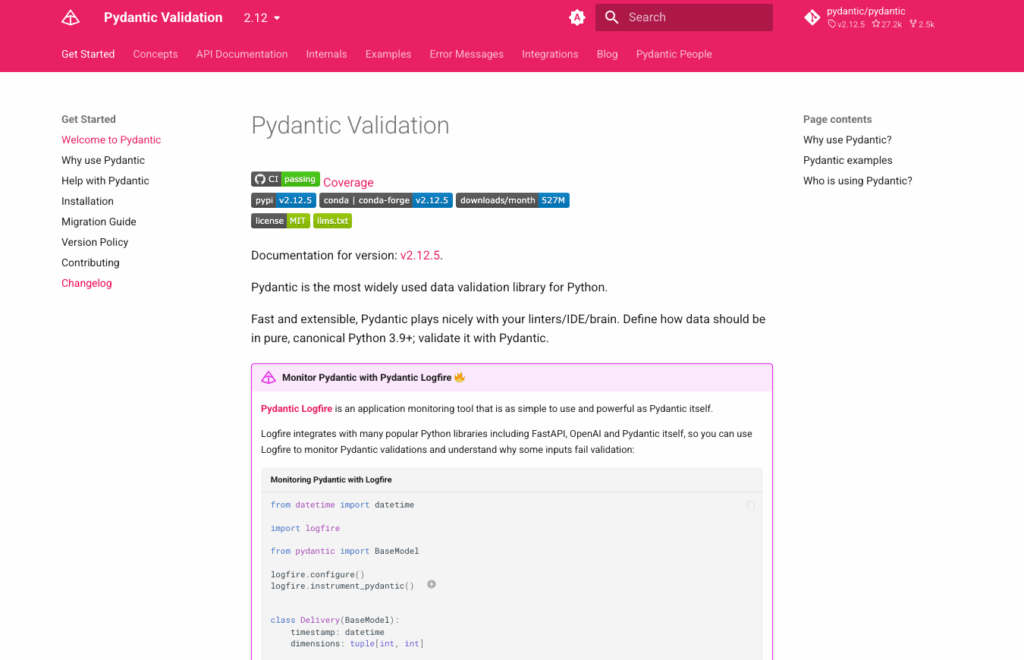
Pydantic excels at data validation and schema enforcement. Define expected data structures as Python classes, and Pydantic validates incoming data, coerces types where appropriate, and provides clear error messages when validation fails. This ensures data requirements are met before data enters your pipelines.
2. Pandera
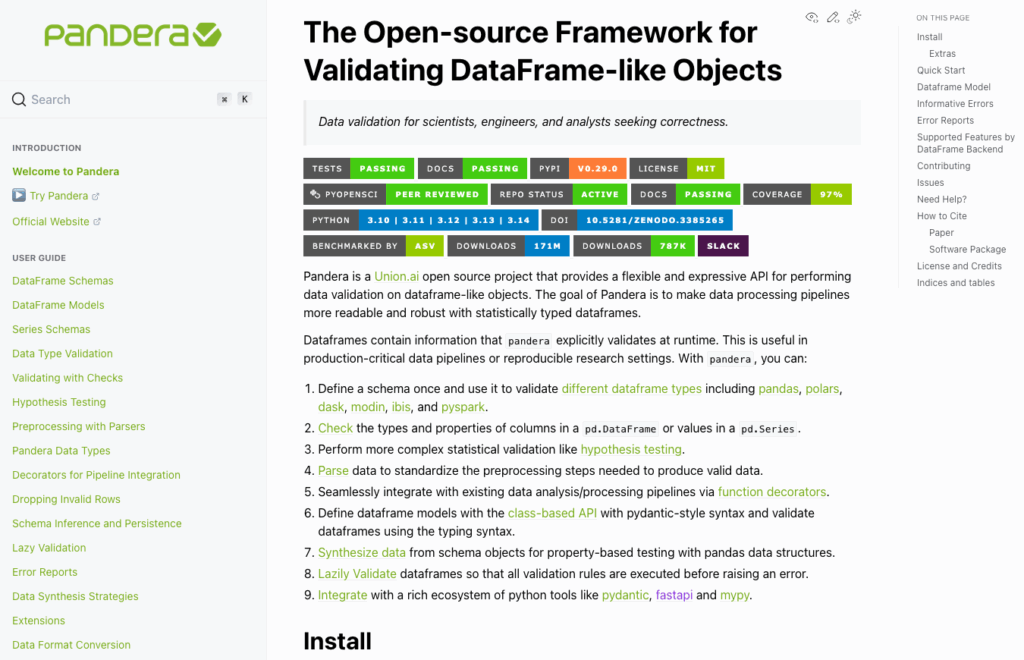
Pandera provides lightweight testing frameworks for DataFrame validation. It lets you define expectations about data quality (value ranges, null handling, referential integrity) and validate data against those expectations automatically.
3. Great Expectations
For more comprehensive enterprise data quality needs, Great Expectations offers profiling, documentation generation, and orchestration integrations, though with significantly more setup complexity.
4. Polars
Polars offers a high-performance alternative to pandas, built with a query optimizer that accelerates transformations on larger datasets. It provides stricter schema enforcement by default and supports both eager and lazy execution modes, making it worth considering for new projects prioritizing speed and type safety.
5. pandas

pandas remains the workhorse for data wrangling and basic model structuring. Its DataFrame abstraction maps naturally to tabular data, and its rich transformation API handles most common modeling tasks. While pandas itself isn’t a data modeling tool—it’s for data manipulation—it does provide the DataFrame foundation that other validation tools (like pandera) build upon.
Bringing Structure to Collaborative Projects
Individual data scientists can maintain mental models of their data structures, but teams need explicit systems. As projects grow from one-person explorations to multi-contributor initiatives, informal practices that worked in isolation break down. Successful collaborative data modeling requires deliberate investment in documentation, versioning, and integration practices that scale across teams.
Documenting Your Data Models
Documentation shouldn’t be an afterthought. In-line comments explain the “why” behind non-obvious transformations. Schema registries document what fields mean and how they relate. Markdown summaries in repositories provide high-level overviews that help stakeholders understand the data modeling process.
Creating visual representations of entity-relationship models helps bridge the gap between technical teams and business users. ER model diagrams communicate data structures in ways that make sense to people unfamiliar with code, supporting better alignment on data requirements and business needs.
Versioning and Sharing Models
Git repositories should include not just code, but also schema definitions and environment specifications. When sharing models across teams, include the conda environment file that specifies required packages.
Anaconda Core supports this workflow by managing project-scoped environments with version isolation. Data teams can create reproducible environments for each project, ensuring consistent schema behavior from development through production, even across different contributors.
Integrating Models Into Production Workflows
Data models eventually feed downstream applications: dashboards for data analytics, ML pipelines, and automated reports for business intelligence. The same modeling logic developed in notebooks should deploy to production without rewrites.
This requires treating data transformations as production code—version-controlled, tested, and documented. Reproducible environments ensure that validated transformations behave identically whether running in a notebook or a scheduled pipeline. This consistency supports data governance requirements and builds trust with business stakeholders who depend on reliable data.
How Anaconda Enables Better Data Modeling Workflows
Structured data modeling requires secure tools that support reproducibility and collaboration. Anaconda’s platform addresses these needs across the modeling lifecycle, helping teams optimize workflows from exploration through production deployment.
Conda manages modeling environments, isolating dependencies and ensuring consistent package versions across team members and deployment environments. When your schema validation logic requires specific versions of pandas and Pydantic, conda ensures everyone works with compatible tools. This environment control is particularly important when working with big data systems or complex data pipelines where version mismatches cause subtle failures.
Anaconda Core includes conda and verifies that dependencies don’t contain known vulnerabilities, which is critical for production systems where insecure packages compromise data pipelines and expose sensitive information. These capabilities support data governance requirements and protect data assets across the organization.
Moving From Experiments to Scalable Systems
Data modeling transforms data science from experimental notebooks into reliable, scalable systems. By establishing clear schemas, documenting transformations, and building reproducible workflows, teams can reduce rework, improve collaboration, and deploy models with confidence.
The principles are straightforward: Design for clarity, validate assumptions, version everything, and control your environment. The tools (i.e., pandas, Pydantic, and pandera) provide the mechanics. But the discipline comes from treating data modeling as essential engineering work, rather than optional polish.
Audit your current approach. Are your schemas documented? Can teammates reproduce your transformations? Do changes to upstream data break silently or raise clear errors? Adopting even a few modeling best practices yields immediate benefits in code quality and team velocity.
Building structured, secure data science workflows requires more than good intentions. It requires platforms that support reproducibility and collaboration from the start. These platforms help teams structure data effectively while maintaining data quality, data integrity, and alignment with business requirements.
Explore how Anaconda’s tools can help your team build scalable data modeling practices.