An AI agent deleted a production database during a code freeze, after being told explicitly not to touch anything. It had valid credentials, and nothing in the system stopped it.
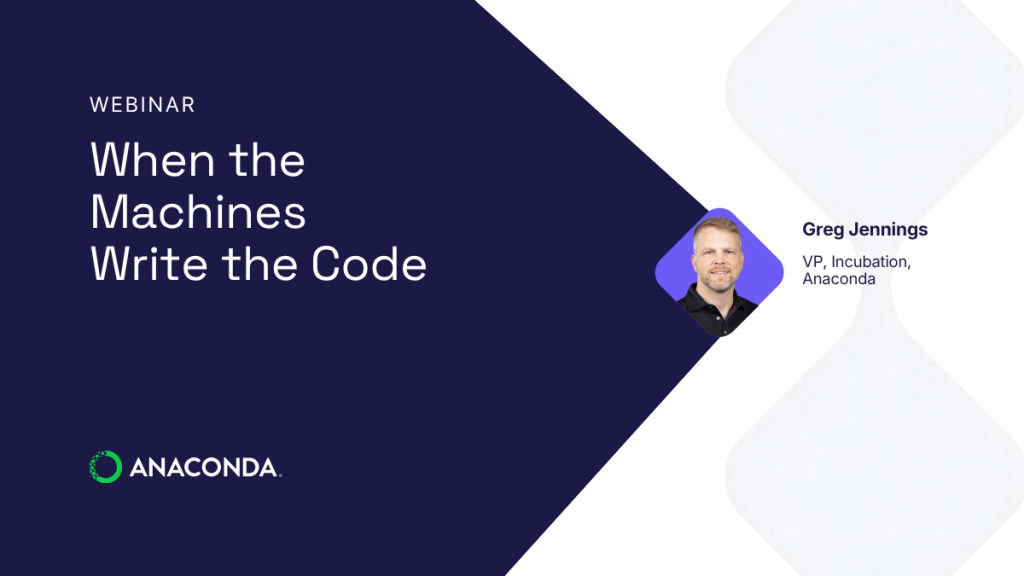
AI coding agents now run inside production systems, writing code, calling APIs, and touching infrastructure. Greg Jennings, VP of Incubation at Anaconda, explains how to set limits on software co-developed by agents that don’t behave the same way twice. He walks through a governance model that limits what an agent can reach without making it useless, with examples of what he’s seen go wrong in production.
This session is for technical leaders, platform engineers, and security and risk teams running production AI systems.
Key topics include:
Why AI agents produce different results from the same input, and why security models built for predictable software don’t cover that
Why an agent’s real limits are set by its credentials, tools, and network access rather than by the instructions you give it
Why prompts alone are not security boundaries, and what needs to replace them
A layered governance framework: reducing the odds of a bad action, limiting what an agent can touch, and keeping visibility and a kill switch
Meet the speakers:
Greg Jennings
VP, Incubation, Anaconda
Greg Jennings is Vice President of Incubation at Anaconda, where he leads teams responsible for the company’s AI services, model catalog, and AI governance stack. His work focuses on extending the trusted supply chain principles that made Anaconda the standard for open-source Python into the era of AI models and agents. Greg holds a Master of Engineering in Materials Science from the University of Virginia.