> ## Documentation Index
> Fetch the complete documentation index at: https://anaconda.com/docs/llms.txt
> Use this file to discover all available pages before exploring further.
# Saving and committing changes in a project
Saving changes to files within an editor or project is different from committing those changes to the Data Science & AI Workbench server. For example, when you select **File > Save** within an editor, you *save your changes to your local copy of the file* to preserve the work you’ve done.
Project file names cannot contain unicode characters (special characters,
punctuation, or symbols).
When you’re ready to update the server with your changes, you *commit your changes to the project*. This also allows others to access your changes, if the project is shared. See [collaborating on projects](./collaborate) for important things to consider when working with others on shared projects.
If the total size of the files stored in your project’s Git repository exceeds
1GB, your project will experience slowdowns or become unresponsive. Anaconda
advises maintaining an individual file size of less than 50MB each. If you
need to work with files that exceed this threshold, speak with your cluster
administrator.
Furthermore, binary files are difficult for version control systems to manage, so Anaconda recommends using storage solutions designed for that type of data, and connecting to those data sources from within your Workbench sessions.
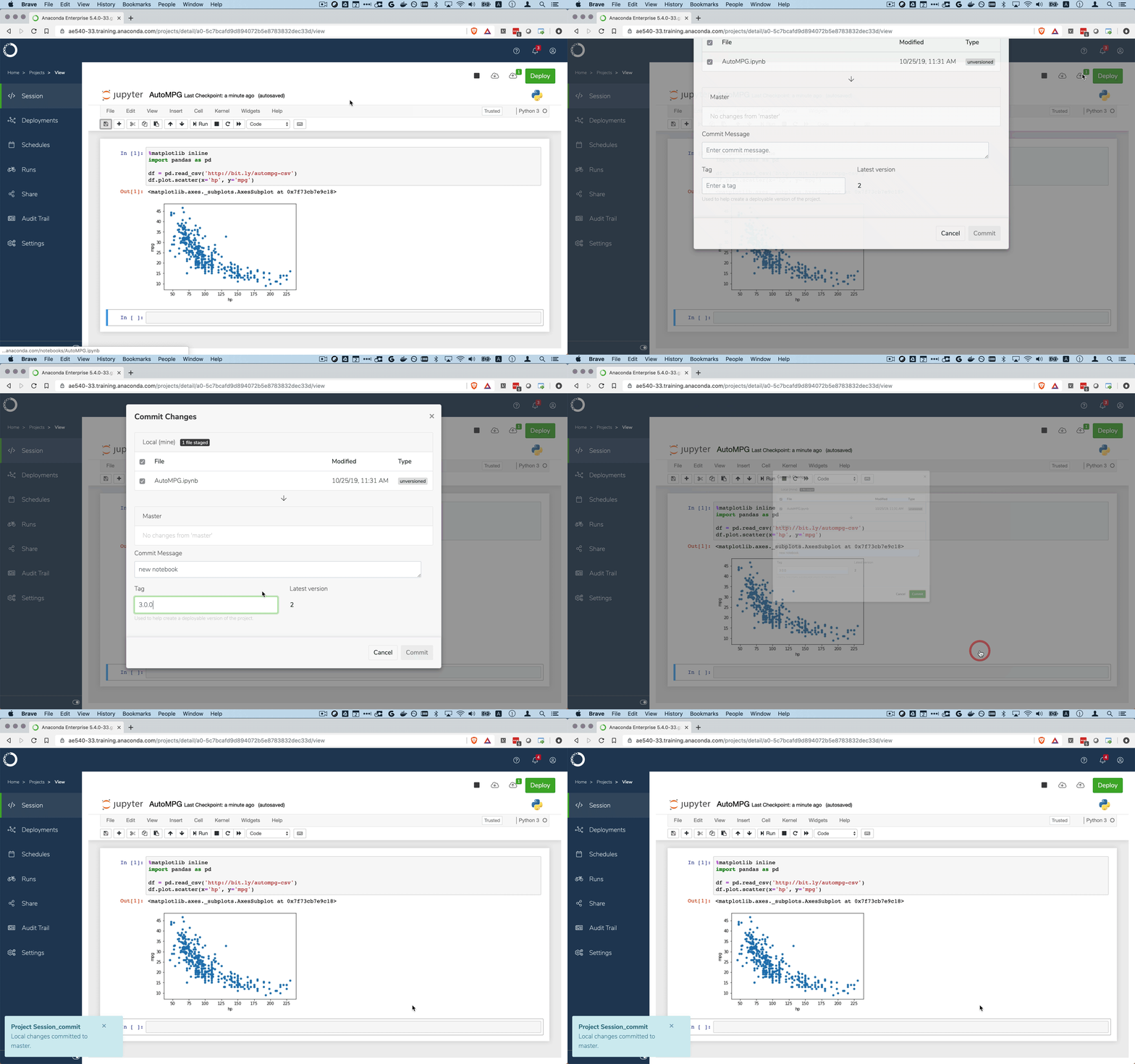
**To commit your changes:**
1. Click the **Commit Changes** icon .
2. Select the files you have modified and want to commit. If a file that you changed isn’t displayed in this list, make sure you saved it locally.
Editors create temporary files that may be displayed in the file list. For
example, Jupyter Notebook and JupyterLab both create a hidden folder named
`.ipynb_checkpoints` for each notebook project you create. This folder is
hidden because the editor uses it internally, to capture the state of your
`.ipynb` file between auto-save operations. Anaconda recommends you [add this
and any other hidden folders to your .gitignore
file](https://git-scm.com/docs/gitignore), so they are excluded from the list
of project files that are checked into version control.
3. Enter a message that briefly describes the changes you made to the files or project.
This information is useful for differentiating your commit from others.
4. Enter a meaningful label or version number for your project commit in the **Tag** field.
You can use tags to create multiple versions of a single project so that you—or collaborators—can
easily deploy a specific version of the project. See [deploying a project](../deployments/main)
for more information.
5. Click **Commit**.